

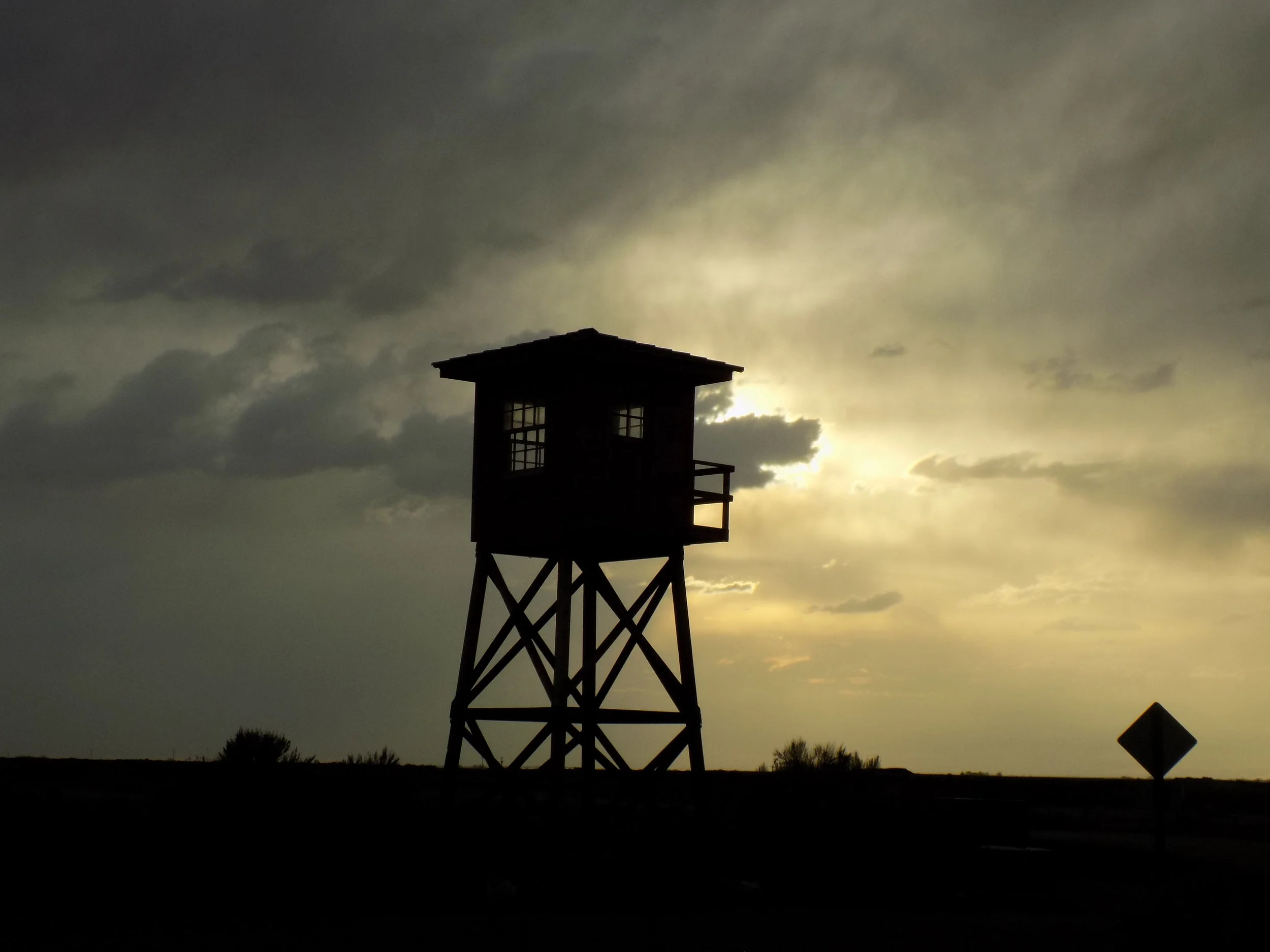
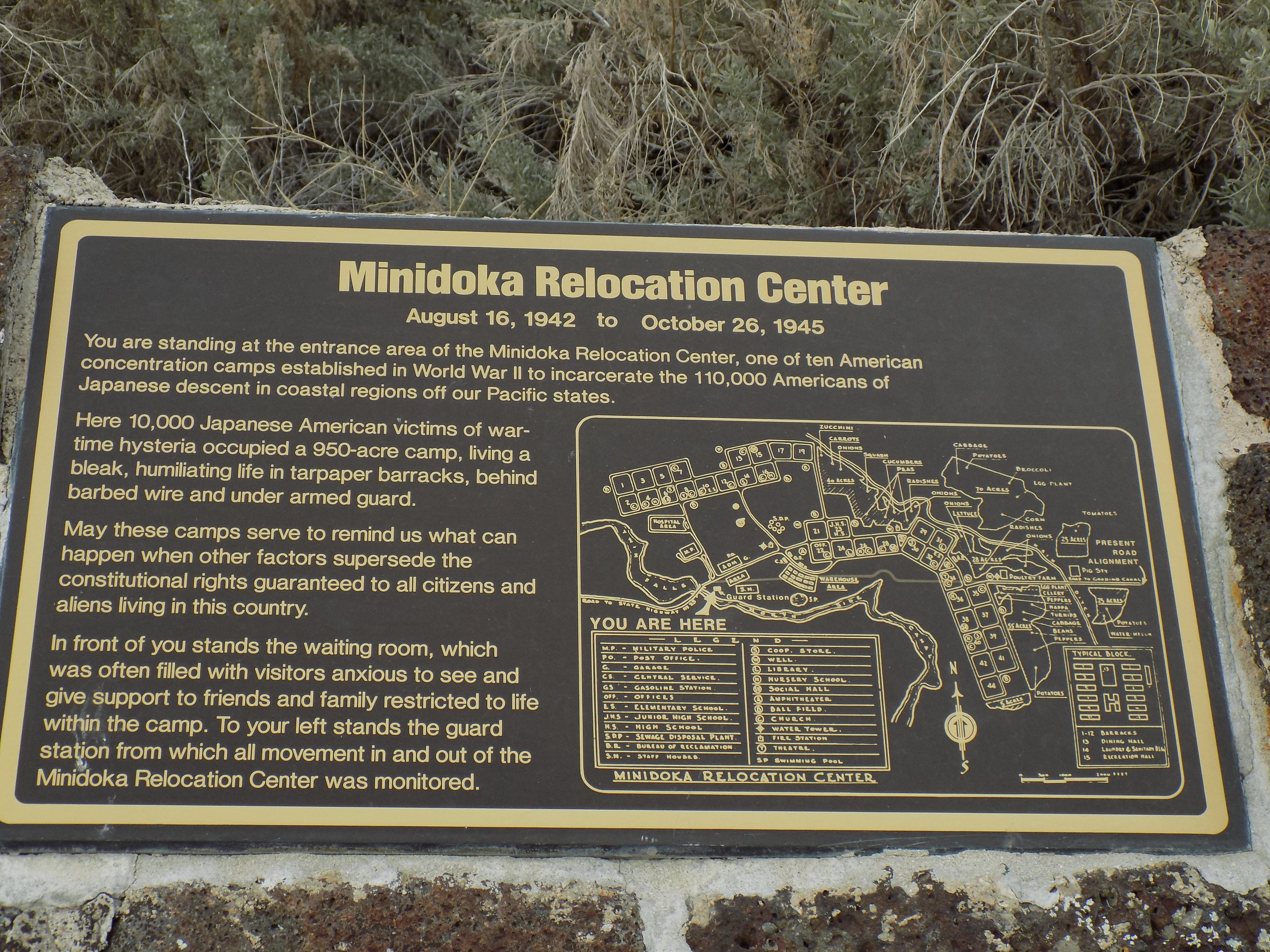
The wind whistles and pushes against my back, urging me to walk faster. My lips are chapped, my cheeks burnt, my eyes watering in its relentless gale. Tiny pebbles driven by the wind abrade bare arms. The camp rustles and whispers with the voices of its long gone residents. As we approach, I’m struck by the lone guard tower, where once there were eight. And at the former reception center, a guide map illustrates the scattering of buildings that were their whole life. The guard tower, silhouetted against the waning sun chastises as I read that there, there was the nursery school. Beneath the glare of the guards, under constant surveillance, a rifle sited not outward, but in, toward the residents.
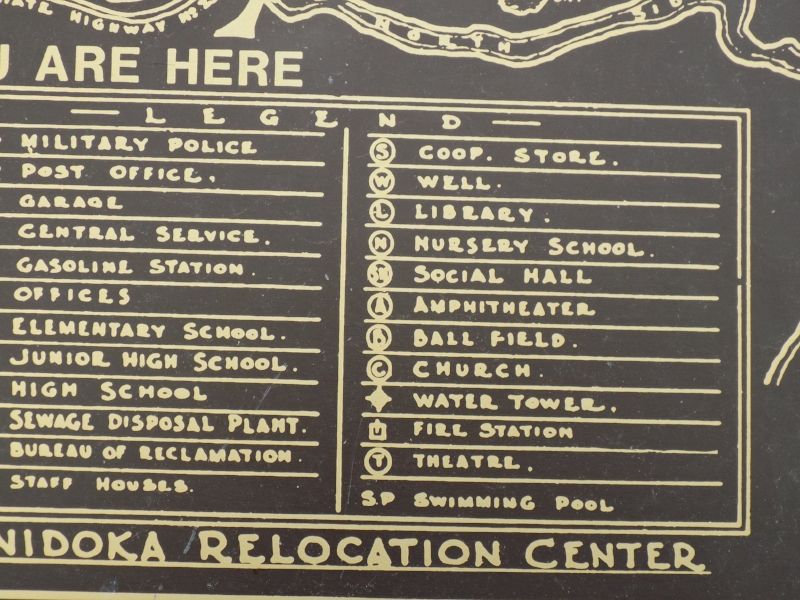
Some walls and fences are made to keep us safe from what lies outside, the snow fences of Wyoming and Idaho, the javelina proof fences of Arizona, the barbed wire cattle fences of Texas, the stockade fences of the old forts in Missouri, and the Pueblo and Kiva walls in New Mexico. But this fence was erected to keep us from the imagined danger of the enemy within. This is the Minidoka Relocation Center.
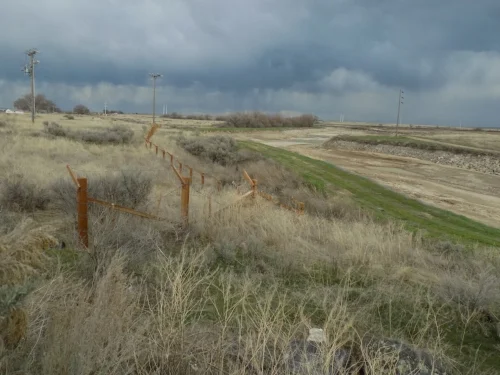
A restored section of the barbed wire fence at Minidoka internment camp
America seemed perfectly willing to sit out the war that was gripping the rest of the Earth in a life or death struggle for ultimate dominance. We turned away the St. Louis, with her load of desperate Jewish refugees seeking safety from Hitler’s atrocities. Many of them would ultimately end up in the death camps, or succumb to harsh conditions in refugee or work camps. But it was not a case of America identifying too much with the Nazis, or the Germans. Daily news of the Axis Powers' war crimes ran in news reels in every theater. The radio brought the news to those who couldn’t spare a quarter for the cinema. It was not a matter of choosing sides. This was a time of isolationism, of turning inward, of America first and the rest of the world be damned. In this insular environment, Japanese-Americans were just Japanese as far as the US government were concerned. There was no path to citizenship for Japanese immigrants. And even those second-generation Japanese-Americans faced outright legal discrimination. In our military, Japanese-Americans need not apply. Yet the Japanese in America considered themselves Americans. Not all, of course. People are always individuals, and the Japanese are as much so as any other group of us. Yet there was no Japanese equivalent of the Bund, the German-American loyalist organization that encouraged German-Americans to preserve their nationality, the leader of which hoped to sway those German-Americans to take the Nazi’s side, should the war come to America. The Japanese-Americans bit their nails and held their opinions in reserve as Japan entered the war. It increased suspicion of them, but after all, they had always been loyal and hard working. Unlike the Chinese, most Japanese immigrants were middle class or professional. They did not isolate themselves in cultural cliques, China Towns, or ghettos. For the most part, Japanese-Americans may have held themselves aloof, but they did not give the appearance of wishing to maintain the ancient ways of their homeland. They blended in, wore suits and western dress, joined the Boy Scouts, participated in various leagues and clubs, played baseball, or at least rooted for their local team.
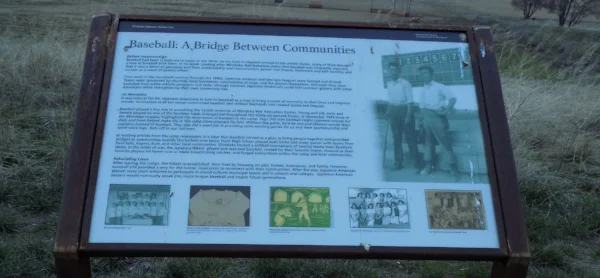
Info board at Minidoka, "Baseball: A Bridge Between Communities"
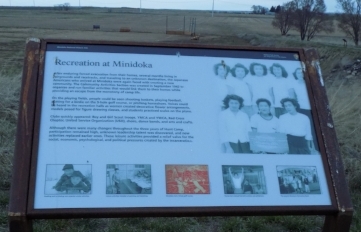
Info board at Minidoka, "Recreation at Minidoka"
December that all changed. A squadron of Japanese Zeros appeared over Honolulu, and the United States was at war with Japan. While it meant war with Hitler and Mussolini and the mighty Russian Bear as well, there was no mistaking who every American blamed for this turn of events. The Japanese were a special enemy. Different. They were so different from us. They dressed funny. They looked funny. They spoke in a strange language, so difficult for westerners to master. They practiced strange religions. Why did they have to worship at shrines? What was wrong with churches? Even temples were more American than shrines. It didn’t matter that the Americanized Japanese were as likely to be Christian or even Jewish as Shinto or Buddhist. They looked foreign. They seemed so foreign. The just weren’t us. And so, it was easy, so easy, to justify the prejudices, the mistreatment. These sneaky Japanese could not be trusted, so they must be rounded up. And if we could not deport them all to Japan, then we would deport them to the interior of our country.
But there were children. Men, women, whole families were ordered to pack a suitcase and be ready to go. There was no time. No time to sell off assets. No time to find buyers for homes, businesses. Some would transfer ownership to neighbors or friends, and hope, hope that they would still have a home whenever they got back to it… if they got back. No one could tell them for how long they would be gone. Most had no idea where they were heading. A few did not even speak English. Others wondered why they should be ordered away from their lives, their schools, their friends, as if they were the enemy? Children went to school in the morning, not knowing they would not be back the next day. I stare at the baseball field. Here they played the American sport. Eventually the dirt lot would get a score board and fence. Eventually neighboring teams and teams of soldiers would be the visiting teams in their games. There are pictures of smiling ball players in full uniform... eventually. Children played here too. They had their junior league, their little league, their Boy Scout troops and Girl Guides. The wind howls and the sky is grey and I think about them swatting a fly ball out into the open field and running the bases. They could run all day in the diamond. The fences made sure they ran no further. Did they long to just keep running?
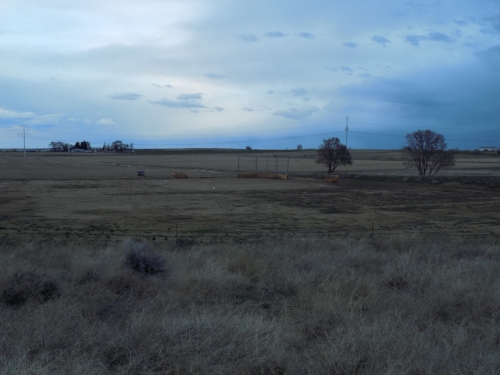
The baseball field at Minidoka
There is a root cellar, now falling down, but in the picture, proud Japanese-Americans smile in front of a solidly built building constructed in the manner still used by farmers in the area today. The arched roof puts me in mind of the Marine barracks and metal garages common in the Southwest. Sod covers the sides, a perfect insulation to hold in the cool in the hot summer months in this wide open place, so different from the Pacific Northwest where many of them had lived before boarding the trains and ferries and buses. The signs here say they made the desert bloom and grow with vegetables enough to supply the camp. The government accounting office must have been doubly pleased. Keeping humans in a camp is expensive. How much easier it is to justify if you can make the very people you are walling in or out pay for their own restrictions.
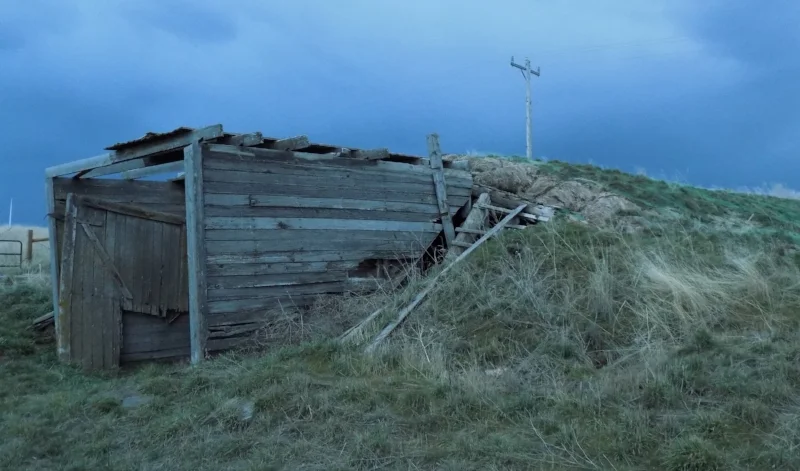
Root Cellar at Minidoka, 2017
The one barracks building left has no windows, now. The wind whistles through the empty building. Did it whistle this way when they lived here, in wooden single walled barracks and tar paper shacks, with no insulation, no fireplace, no homey furnishings? Were they cold? I am cold and the rocks pelt me and my hair is in my eyes and maybe that’s why my eyes are watering, the wind.
There’s a rock structure. It used to be the MP stand. It was the place where every visitor in and out of the camp had to be checked in, checked against a list, given a pass or turned away. How did it feel, to visit family and friends here? Was it frightening, with the gate guard and the tower and the guns? Or did it seem normal, in the midst of war? Did the visitors accept it as necessary? Did they resent it? Did they feel as I did, the target on their back as they were admitted to the city where the guards’ guns are pointed inward? Did they feel guilty as they left, knowing the citizens of this odd community could not walk out again as they had? After a while, did the number of visits dwindle, as it just became too much? Did they ask for things? I remember being in military camps, training schools, remote locations, and hitting up every visitor or concerned caller for batteries, gum, candy, photos from the outside…. Did the residents of the camp bother their friends and family to send them this thing or that, until the demands were too much, and those outside the camp broke contact to avoid the responsibility and guilt?
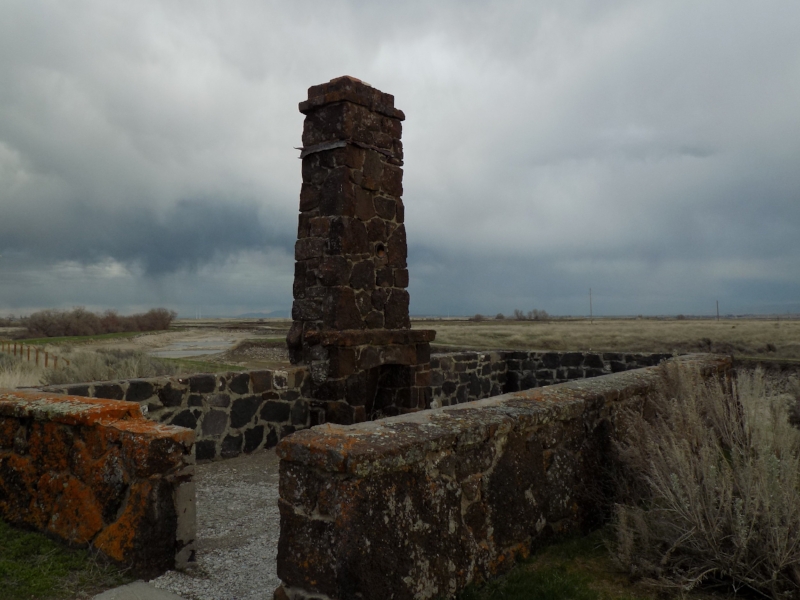
Remains of the camp welcome and reception building
There’s a long path to the canal, behind the welcome center that must have felt anything but welcoming. The signs said it was a cheerful place where people fished and tried to remember what it was like back home, where the water ran freely. The water wanders into the camp, under the road, and away. The water is free to leave the camp, but the citizens remain.
And they were citizens. Americans.
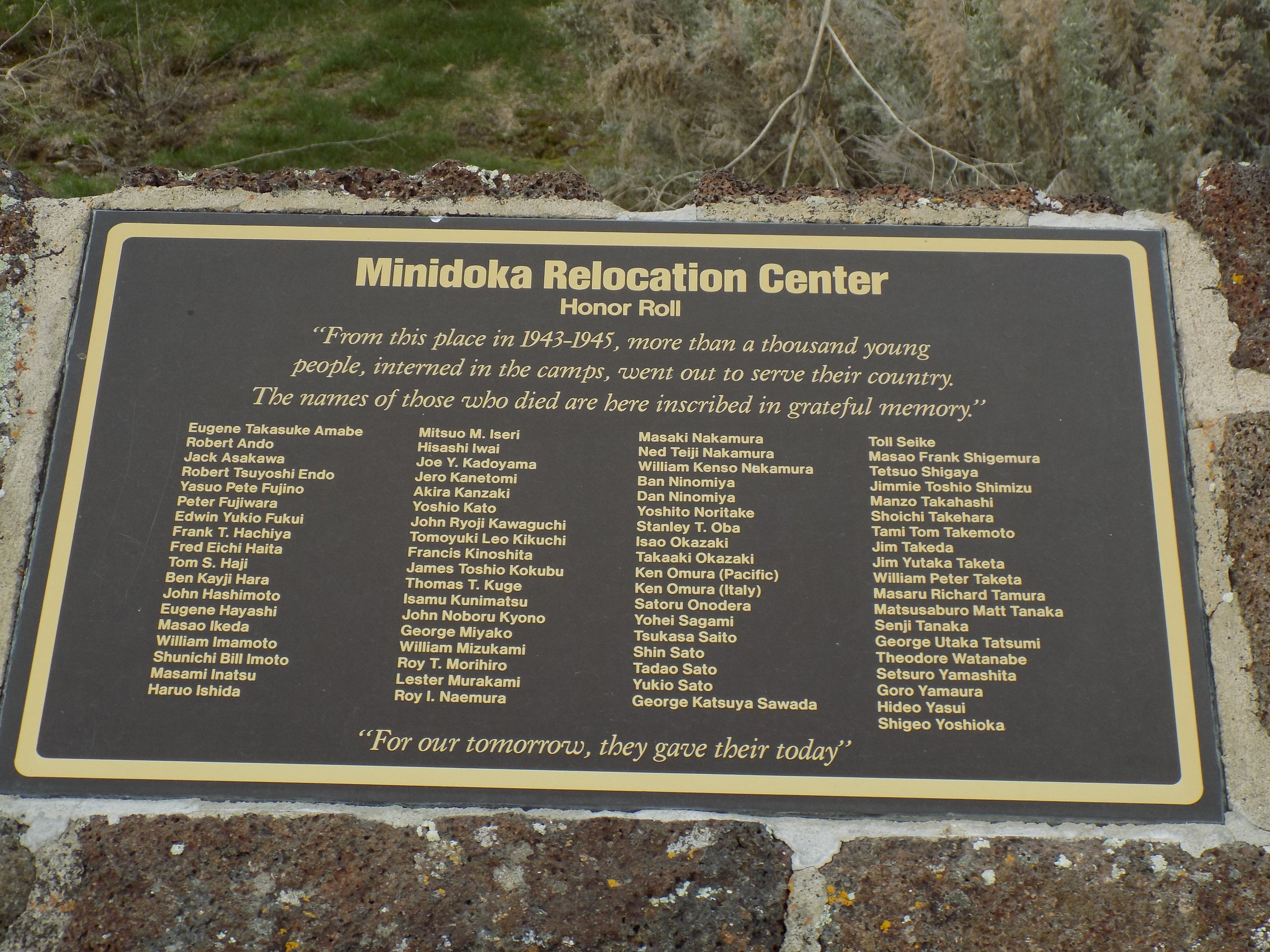
Some of them felt the call to serve. Whether it was a desire to defeat the enemy, or to prove their allegiance to their adopted homeland, or just to escape the prison that was their home, they volunteered. But at first, the US military claimed not to need them. They couldn’t be trusted. A double blow, and a catch 22. The Japanese were suspected of being sympathetic to the Emperor and their fatherland, yet were denied the opportunity to prove their loyalties. Finally, the war department relented. Henry L. Stimson, Secretary of War said, “It is the inherent right of every faithful citizen, regardless of ancestry, to bear arms in the nation’s battle…” This quote is included on the board that features the Honor Roll. The Japanese-Americans who enlisted to serve. There are stars next to some of those names. Their honor is our shame. They never should have been there. There never should have been such a community to volunteer up its young men as sacrifices to prove their loyalty. There never should have been any question but that they could and should serve like any other American. Their bravery and honor shame me as I read the names. The Japanese sir names so often paired with names like George and Eugene. Americans.
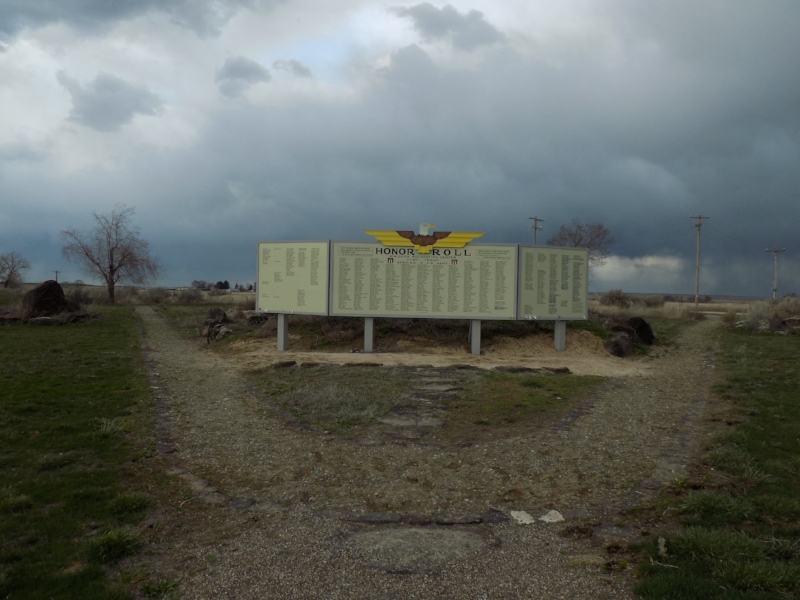
Billboard at Minidoka, "Honor Roll", lists internees who enrolled in the military from Minidoka
Recently politicians have told us that the Japanese internment during the war was an example of humane treatment we could again apply, possibly to new immigrants, refugees, or even American citizens who look different, act different, have a different language and a different religion. During the war, the movement and internment was justified by pointing to some hostility in America toward the Japanese. Some stores were damaged, windows broken, a few people beaten up. Thus, the imprisonment… let’s call it what it is, not internment, but imprisonment… of Americans who don’t look like us, who look too much like the enemy, is excused by those in power, and accepted by the populace.
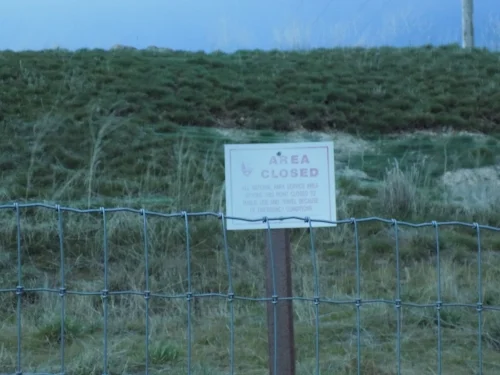
The wind whistles through the wreckage of the remaining buildings. There are no voices here. No soldiers patrol these grounds. The vegetable gardens are back to native shrub. There is a sign just back of the wire fence by the root cellar warning us to stay out, there is danger there.
What is behind the fence is always dangerous. But whether we are behind or in front of the fence, that is the question.
Minidoka 1942-2017
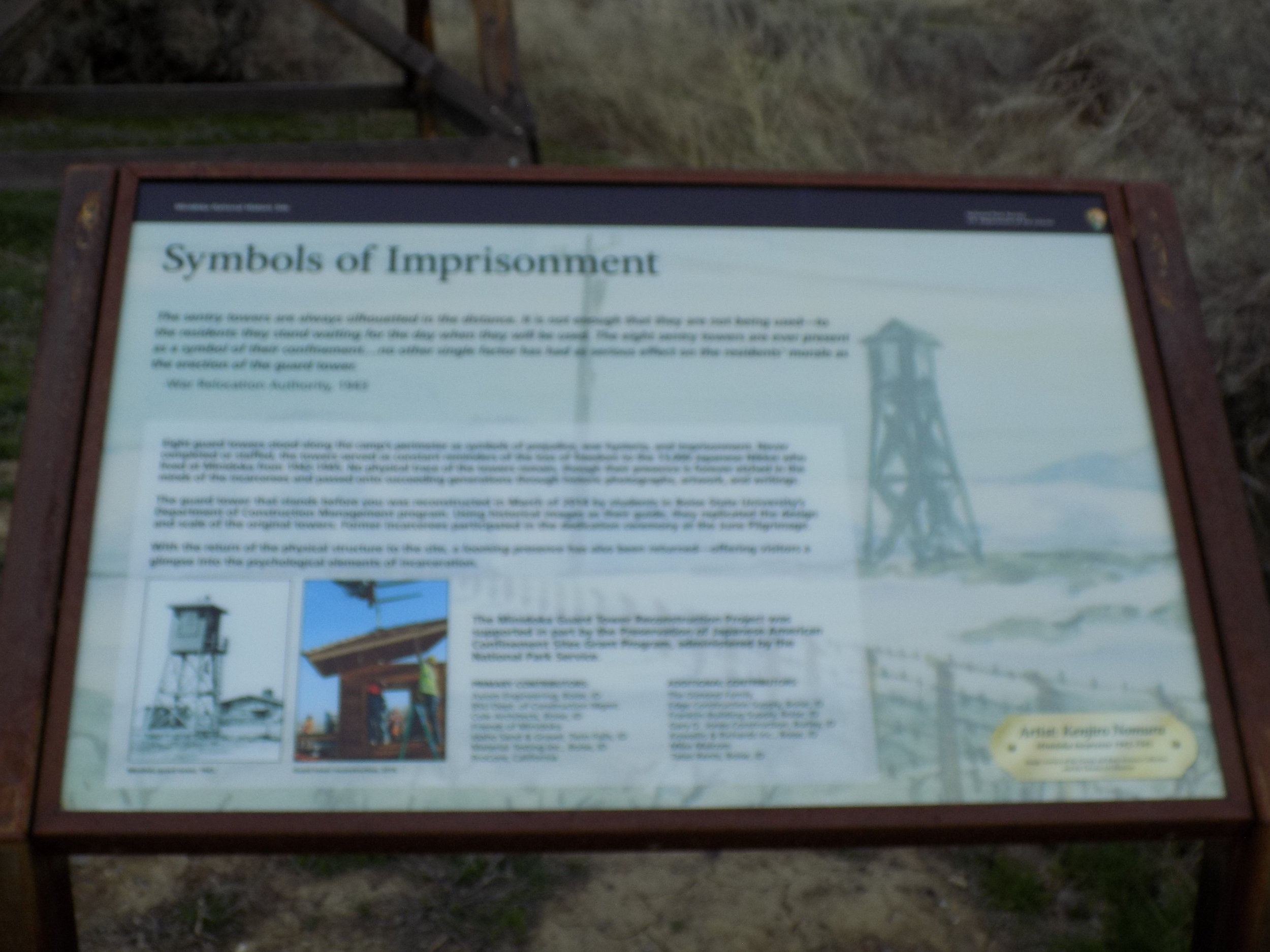
This site is maintained by the Park Service and the Bureau of Land Management. For years, the camp sat, slowly deteriorating. There were probably those who wished it would just fade back into the desert. It was saved through the tireless efforts of the Japanese-American community. But without maintenance, funding, and constant upkeep, the buildings will continue to rot. There are placards missing. Some of the buildings are unidentified. The pathways need tending. The buildings need preserving. We need to remember. There are those that would like us to forget, not because they are ashamed, but because they are not. They would like to pretend such things did not happen, that there was no nursery school under threat of hot lead, no children restricted to life within barbed wire. They paint the picture of camps in which only men and dangerous people need be herded into corrals for the safety of the rest of us. They would like us to believe this camp is an example we could again follow. They want to cut funding to the agencies that maintain our history, because history is inconvenient, and unpleasant, and true. Without these guardians of our past, the wind will again whistle, and carry with it the voices of our fellow Americans, trapped in cities in which the guards turn their guns inward.
For additional information, go to the National Parks Webpage or visit this historic location, before it is gone forever, along with the memories of those whom it contained.
